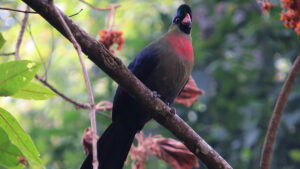
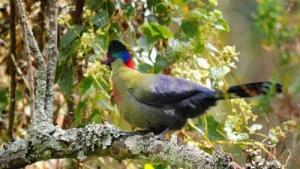
Bird Watching in Rwenzori Mountains National Park : The park has been home to 217 different species. The park has 18 Albertine endemics, which is second only to Bwindi Impenetrable National Park in Uganda, which has 24.
Why Bird Watching
Birds are beautiful mysterious creatures that we humans have always been fascinated with for as long as we have existed. We marvel at their beauty, their striking colors, beautiful varied songs, and their amazing ability to fly.
The largest appeal of birds and bird watching is that they are so accessible that one can practically bird watch from anywhere! Birds are all around us, all we need to do is pay attention to the environment and get drawn into their curious world
True bird watchers do more than just watch for birds. We observe the habitats the birds live in, track bird migration patterns, take note of bird reproductive habits, and record new bird species they observe.
Bird watching is such a rewarding activity, just like learning a complex new skill or language. There is never s shortage of new birds to see or new things to learn. Birders travel from all over the world to different destinations to observe new birds and learn about the fascinating places these birds are located.
With the steady growth of birdwatchers worldwide, there’s a great need for professional BIRD GUIDES in Africa to lead these curious birders in the field. The first level is meant to make you fall in LOVE with birds! We have established a bird sanctuary in Kahindangoma where the Bakonzo King palace was established in the late 1960s. Other than mammal species, Rwenzori Mountains National Park is an exceptional and a complete Uganda safari destination boasting of a significant bird population. Over 217 bird species are confined within this pristine safari park and they include 17 endemic species which makes it one of Uganda’s important birding areas.
Majority of the birds in Rwenzori Mountains National Park concentrate around 1800m altitudinal range where the forest zone exists and the important bird species to expect to identify here include montane sooty Boubou, barred long tailed cuckoo, Rwenzori turaco, handsome francolins, long eared owl, Rwenzori batis, Lagden’s bush shrike, white starred robin. Other species of birds this park boasts of include IIladopsis, blue headed sunbird, strange weaver birds, slender billed starling, lammergeiers, cinnamon chested bee-eater, golden winged sunbird, flycatchers, Greenbuls, barbets, Apalises, crimson wings etc.
Rwenzori Mountains is UNESCO world heritage site and known for its snow capped peaks and a variety of 217 bird species. Rwenzori Mountains National
Park has the highest mountain ranges in Africa. Its highest point lies at 5109m above sea level on Mt Stanley’s Margherita Peak which is the third highest in Africa. It lies astride the equator with six peaks and three of these i.e. Mt Stanley, Mt Baker and Mt Speke are permanently covered with snow. The park covers an area of 996 km2. . It was recognized as a UNESCO world Heritage site in 1994 and was listed by world geographic among the best hikes in the world. It lies in western Uganda about 6 hours’ drive from Kampala.
Rwenzori is known as ‘mountains of the moon’ a name given to it by Alexandrine geographer Ptolemy in AD 150. Locally known as Ruwenzori, is translated as “rain maker” or “cloud-king.” The Rwenzori is not volcanic like East Africa’s other major mountains but is a block of rock faulted through the floor of the western Rift valley. The hike will take you through varied vegetation covers which include montane forest, bamboo forest, tree heath, hagenia-rapanea scrub and afro-alpine moorland.