

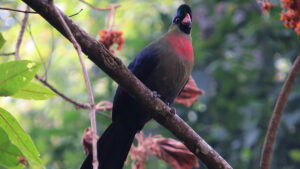
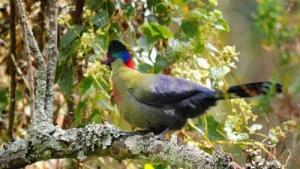
The Rwenzori forests are home to 217 bird species including several Albertine Rift endemics. Among these are 17 species that are endemic to the park making Rwenzori an important birding area (IBA). The forest zone at 1800m contains a diversity of birds including the Rwenzori Turaco, Barred Long-tailed Cuckoo, Long-eared Owl, Handsome Francolin, Cinnamon-chested Bee-eater, Archers’ Robin-chat, White-starred Robin, Rwenzori Batis, Montane Sooty Boubou, Lagden’s Bush Shrike, Slender-billed Starling, Blue-headed Sunbird, Golden-winged Sunbird, Strange Weaver and several varieties of Barbets, Greenbuls, Apalises, IIladopsis, Flycatchers and Crimson wings.
Classified as an Important Birding Area (IBA) by Birding International, Queen’s great variety of habitats mean it is home to over 600 species. This is the greatest of any East African national park and a phenomenal number for such a small area. The park’s confluence of savanna and forest, linking to the expansive forests of the DR Congo allow visitors to spot East as well as Central African species.
Rwenzori Community Environmental Conservation Trust has started a bird sanctuary project to protect varieties of birds alongside the boundaries of Rwenzori Mountain National Park in Kahindangoma zone from extinction.
Wildlife:
Rwenzori forests are home to more 70 species of mammal, including six Albertine Rift endemics; four are endemic to the park and three are rare species. Other mammals include the elephant, chimpanzee, Rwenzori otter and leopard. Though wildlife is difficult to spot in the dense forest, do look out for primates such as colobus (Angola and black-and-white varieties are both present) and blue monkeys; small antelope such as bushbucks; and unusual reptiles such as the three-horned chameleon.
Vegetation
Rwenzori Mountains is known for its distinctive flora rather than its fauna. On the route to the peaks, hikers climb through a series of distinct altitudinal vegetation zones; montane forest, bamboo, tree heathers and afro-alpine. The latter, with its emblematic giant forms of Senecio (groundsel) and lobelia, is one of the world’s rarest botanical communities, being limited to East African Mountains above 3800m.